Hydraulic oil vs. engine oil in Bangladesh: Key differences, uses & grades
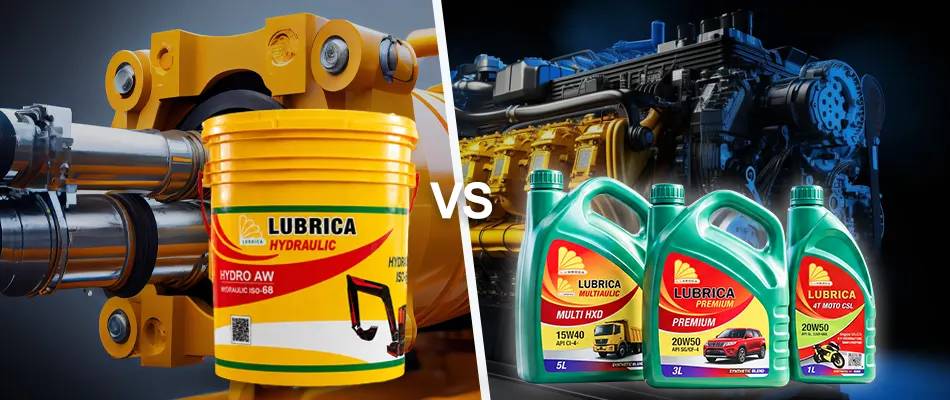
Hydraulic oil and engine oil do different jobs, even though both help reduce friction and protect moving parts. Hydraulic oil transfers power through hydraulic systems in excavators, lifts and industrial machines. Engine oil protects internal engine components in trucks, buses, generators and other vehicles. Using the wrong oil can lead to poor performance, faster wear and costly repairs.
In Bangladesh, construction sites, factories and transport businesses use both types of lubricants every day. But which oil does your machine actually need? This guide compares hydraulic oil vs. engine oil, including their functions, viscosity grades, applications and key differences. You will also learn how to choose the right oil for your equipment.
Hydraulic oil vs. engine oil: Key differences at a glance
Hydraulic oil and engine oil may look similar, especially when they are new. Both usually contain base oils and additives. Their formulations, performance requirements and operating conditions aren't the same. Below is a quick comparison.
Comparison
Hydraulic Oil
Engine Oil
Main purpose
Transfers hydraulic power and lubricates components
Pistons, bearings, camshafts, crankshafts and other engine parts
Viscosity grading
Commonly ISO VG 32, 46, 68 and 100
Commonly SAE 10W-30, 15W-40, 20W-50 and monograde SAE grades
Additive focus
Anti-wear, oxidation control, rust protection, air release
Detergency, dispersancy, wear protection, oxidation and acid control
Operating conditions
Hydraulic pressure, fluid flow and system temperature
Combustion heat, contaminants and engine load
Main contamination concerns
Dust, water, particles and air
Soot, fuel dilution, combustion by-products and particles
Can they replace each other?
Only where the equipment manufacturer explicitly permits it
Not a general replacement for hydraulic oil
Important Note: Some construction equipment manufacturers approve particular engine oils for specific hydraulic systems. That doesn't mean every engine oil works in every hydraulic machine.
What is hydraulic oil, and how does it work?
Hydraulic oil is a fluid that transfers power through a hydraulic system. It also lubricates moving parts, carries heat away and protects internal metal surfaces. Hydraulic oil helps operate cylinders and motors while reducing wear inside the system. A suitable hydraulic oil helps:
Transfer power through the hydraulic circuit.
Reduce wear inside pumps, valves and cylinders.
Maintain suitable viscosity during operation.
Release trapped air and control foaming.
Protect metal surfaces against rust and corrosion.
Manage heat generated during machine operation.
Common uses of hydraulic oil in Bangladesh
Hydraulic systems are used across several Bangladeshi industries. Construction sites in Dhaka, Gazipur and Chattogram use excavators, loaders, and other hydraulic equipment. Factories around Savar, Ashulia and Narayanganj use hydraulic machinery for pressing, lifting and production work. Some common applications include:
Excavators and construction machinery
Hydraulic presses and industrial production equipment
Hydraulic lifts and lifting platforms
Injection moulding machines
Industrial hydraulic power units
Forklifts and material-handling equipment
Agricultural machinery with hydraulic systems
What is engine oil, and why do engines need it?
Engine oil lubricates the moving parts inside an internal combustion engine. It helps reduce friction, control deposits, carry heat away and protect metal surfaces against wear. A diesel truck engine works under very different conditions than a hydraulic cylinder. Fuel burns inside the engine. Pistons move repeatedly, bearings carry loads and combustion produces soot and other by-products. Engine oil must handle those conditions. Its main jobs include:
Lubricating pistons, bearings and other engine components
Reducing friction and mechanical wear
Helping control soot, sludge and carbon deposits
Carrying heat away from lubricated components
Protecting internal surfaces against corrosion
Helping neutralise acidic combustion by-products
Maintaining a suitable oil film under engine load
Common engine oil applications in Bangladesh
Bangladesh has a large number of vehicles operating in crowded cities, industrial zones and long-distance transport routes. Engine oil is essential for:
Passenger cars and microbuses
Motorcycles and scooters
Heavy trucks and covered vans
Intercity and local buses
Diesel generators
Agricultural diesel engines
Construction equipment engines
Hydraulic oil vs. engine oil: 5 important technical differences
Hydraulic oil and engine oil both protect moving parts, but they don't work the same way. Their viscosity grades, additives and operating conditions are different. That's why a hydraulic press in a Gazipur factory and a diesel truck running on the Dhaka–Chattogram highway need different types of oil. Here are five technical differences worth knowing before choosing a lubricant.
Main function: Power transmission vs. engine lubrication
Hydraulic oil transfers power through pressurised fluid. In an excavator, for example, the hydraulic pump pushes oil through valves and cylinders to move the boom and bucket. The oil also lubricates the hydraulic components and helps control heat.
Engine oil mainly reduces friction between moving engine parts. It protects pistons, crankshafts, bearings and other components during operation. It also helps control deposits and carries heat away from lubricated surfaces.
Additive formulation and protection
Hydraulic oil contains additives that help prevent wear, rust, oxidation, and foaming. Good air-release and water-separation properties also matter, particularly in industrial hydraulic systems.
Engine oil needs a different additive package. Detergents and dispersants help control soot, sludge, and other combustion-related contaminants. Anti-wear agents and antioxidants protect engine components during long operating hours. That's why ordinary hydraulic oil shouldn't replace engine oil, even when both oils appear similar.
Viscosity grades: ISO VG vs. SAE
Hydraulic oil commonly follows the ISO VG viscosity classification, with grades such as ISO VG 32, 46, 68, and 100. Engine oil follows the SAE viscosity classification, including grades such as SAE 15W-40, 20W-50 and SAE 40.
ISO VG classifications identify viscosity ranges measured at 40°C, while SAE J300 engine oil grades use specified low-temperature and high-temperature viscosity requirements. This means ISO VG 46 and SAE 15W-40 cannot be compared simply by their grade numbers. Check the equipment manufacturer's viscosity and performance requirements before selecting an oil.
For example, KMS Lubrica (BD) Ltd supplies hydraulic oils in ISO VG 32, 46, 68 and 100. Its heavy-duty diesel engine oil range includes Lubrica Multi HXD SAE 15W-40 and Lubrica Mono HD SAE 40, 50 and 60.
Operating conditions and contamination
Hydraulic systems work under pressure. The oil must flow properly through pumps, valves and cylinders while handling heat, air and possible contamination from dust or water. Engines face combustion heat, soot, fuel dilution and acidic by-products. Engine oil must continue lubricating while controlling these contaminants.
In Bangladesh, dusty construction sites and long-running industrial equipment make proper filtration and oil maintenance especially important. For trucks and buses, engine load, idling and operating hours also affect oil condition.
Oil change intervals and maintenance
Engine oil changes usually depend on mileage, engine hours, time and the manufacturer's service schedule. A commercial truck running daily between Dhaka and Chattogram may have different maintenance demands than a vehicle used occasionally.
Hydraulic oil maintenance depends on operating hours, oil temperature, filtration and contamination levels. Some industrial systems also use oil analysis to check viscosity, water content and wear particles.
How to choose the right hydraulic oil or engine oil
Start with the equipment manufacturer's manual. A hydraulic pump and a diesel engine may operate in the same machine, but they can require completely different lubricants. Check the manufacturer-recommended hydraulic fluid specifications before choosing a hydraulic oil grade. The correct selection depends on the equipment design, operating temperature, viscosity requirements and approved fluid type.
Equipment type: Identify whether the oil is intended for a hydraulic system, diesel engine, petrol engine or another component.
Viscosity grade: Follow the recommended ISO VG or SAE grade rather than choosing based on oil thickness alone.
Performance specification: Check the required hydraulic fluid standard or engine oil performance classification.
Operating conditions: Consider machine temperature, load, working hours and exposure to dust or moisture.
Oil compatibility: Avoid mixing different lubricants unless the equipment manufacturer permits it.
Maintenance schedule: Follow the recommended oil change interval and check oil condition regularly.
For bulk lubricant orders in Bangladesh, share your machine model, required oil grade and pack size with the supplier before requesting a quotation.
Estimated hydraulic oil and engine oil prices in Bangladesh
Hydraulic oil and engine oil prices in Bangladesh mainly depend on the oil grade, brand, formulation and pack size. A factory buying hydraulic oil in a 205L drum will pay a different rate per litre than a truck workshop buying 5L or 20L engine oil packs. For hydraulic oil, ISO VG 46 and ISO VG 68 are commonly used in industrial equipment. Engine oil prices vary across SAE grades such as 15W-40, 20W-50 and SAE 40. The oil's technical specification also affects its price.
Lubricant type
Common pack size
Estimated price (BDT)
Hydraulic oil ISO VG 46
20L
7,000–10,000
Hydraulic oil ISO VG 68
20L
5,200–11,000
Hydraulic oil ISO VG 46/68
205L–208L
45,000–90,000
Diesel engine oil SAE 15W-40
5L
2,600–3,700
Heavy-duty diesel engine oil
20L
7,500–15,000
Bulk engine oil
205L–208L
37,000–90,000+
Note: These are indicative market price ranges, not fixed KMS Lubrica selling prices. Actual prices depend on brand, viscosity grade, oil specification, pack size and order quantity. Call us at 01950-066692 for current product availability and an accurate quotation.
What happens when you use the wrong oil in a machine?
Using the wrong oil doesn't always stop a machine immediately. An excavator may keep running, or a truck engine may sound normal at first. However, unsuitable viscosity or additives can affect lubrication, increase friction and damage moving parts. Following the manufacturer's recommended oil grade and hydraulic oil safety and specifications is important for protecting equipment. The table below highlights common problems caused by using unsuitable hydraulic oil or engine oil.
Problem
Possible reason
What to check
Slow hydraulic movement
Incorrect viscosity, flow restriction or pump issues
Fluid grade, pressure, filter and pump condition
Hydraulic pump noise
Aeration, cavitation or unsuitable viscosity
Oil level, suction line, fluid and filters
Hydraulic oil overheating
Excessive losses, incorrect fluid or system faults
Oil temperature, cooling system and pressure
Engine sludge or deposits
Unsuitable oil, contamination or overdue maintenance
Oil specification, operating hours and engine condition
Increased mechanical wear
Inadequate lubrication or contamination
Correct lubricant, filters and wear indicators
Foaming in hydraulic reservoir
Air entry, contamination or unsuitable fluid properties
Reservoir, return lines, oil condition and fluid compatibility
Choosing KMS Lubrica (BD) Ltd for hydraulic oil and engine oil in Bangladesh
KMS Lubrica (BD) Ltd is a lubricant manufacturer in Bangladesh, supplying hydraulic oil and engine oil for industrial equipment, construction machinery, diesel engines and commercial vehicles. With a local lubricant blending plant operating since 2017, we support businesses that need suitable lubricant grades for different operating conditions.
Quality Lubricants: Get reliable hydraulic oil and engine oil for industrial machinery, diesel engines and commercial vehicles.
Wide Product Range: Choose from different lubricant types, viscosity grades and specifications based on your equipment needs.
Competitive Pricing: Get cost-effective lubricant options for regular maintenance and bulk industrial requirements.
Expert Product Guidance: Receive practical advice on choosing suitable oil grades based on equipment specifications and operating conditions.
Reliable Lubricant Supply: Source hydraulic oil and engine oil for factories, workshops, construction equipment and transport fleets.
International Certifications: Choose a lubricant manufacturer with ISO 9001:2015 and ISO 14001:2015 certifications.
BPC and BSTI Credentials: Buy lubricants from a manufacturer with relevant BPC and BSTI credentials in Bangladesh.
Local Manufacturing Facility: Get products from our lubricant blending plant in Hemayetpur, Savar, Dhaka.
Buy hydraulic oil and engine oil in Bangladesh
Looking for hydraulic oil or engine oil in Bangladesh? KMS Lubrica (BD) Ltd supplies ISO VG 32, 46, 68 and 100 hydraulic oils for industrial machinery, hydraulic pumps and construction equipment. We also supply heavy-duty diesel engine oils for trucks, buses, generators and commercial vehicles.
We serve factories, workshops, construction companies and fleet operators across Bangladesh. Whether you need a small quantity or bulk lubricant supply, contact us today with your machine specifications and required oil grade.
FAQs about hydraulic oil vs. engine oil in Bangladesh
Hydraulic oil and engine oil have different uses, viscosity grades and performance requirements. If you're choosing oil for a truck, excavator or factory machine in Bangladesh, these FAQs will help you understand the differences and avoid common mistakes.
What is the main difference between hydraulic oil and engine oil?
Hydraulic oil transfers power through a hydraulic system and protects pumps, valves and cylinders. Engine oil lubricates engine parts and helps control heat, soot and deposits. Both reduce friction, but they work under different conditions. In Bangladesh, excavators, hydraulic presses and industrial machines commonly need hydraulic oil, while trucks, buses and diesel generators need engine oil.
Can I use SAE 15W-40 engine oil as hydraulic oil?
Only when the equipment manufacturer permits that specific grade and performance specification. Certain construction machines accept specified heavy-duty engine oils in their hydraulic systems. Don't use SAE 15W-40 as a substitute without checking the machine manual.
Which hydraulic oil grade is best for Bangladesh?
ISO VG 46 and ISO VG 68 are common options for industrial hydraulic equipment. However, the correct grade depends on the machine design, pump requirements and operating temperature. Always follow the manufacturer's recommended viscosity and fluid specification.
Bangladesh's ambient temperature alone is not enough to determine the correct grade; operating temperature, pump design and manufacturer specifications also matter.
Is hydraulic oil thicker than engine oil?
Not necessarily. Both are available in different viscosities. Hydraulic oil commonly uses ISO VG grades, while engine oil uses SAE grades. You need the actual viscosity values at comparable temperatures to compare their thickness accurately.
ইঞ্জিন অয়েলের পরিবর্তে কি হাইড্রোলিক অয়েল ব্যবহার করা যায়?
না। সাধারণ হাইড্রোলিক অয়েলে ইঞ্জিনের প্রয়োজনীয় ডিটারজেন্ট, ডিসপারস্যান্ট ও অন্যান্য সুরক্ষামূলক অ্যাডিটিভ থাকে না। তাই ইঞ্জিন অয়েলের পরিবর্তে এটি ব্যবহার করলে ইঞ্জিনে ময়লা জমা, অতিরিক্ত ক্ষয় এবং যান্ত্রিক সমস্যা দেখা দিতে পারে।
হাইড্রোলিক অয়েল আর ইঞ্জিন অয়েল কি একই?
না। হাইড্রোলিক অয়েল মূলত হাইড্রোলিক সিস্টেমে চাপের মাধ্যমে শক্তি সঞ্চালন করে এবং পাম্প, ভালভ ও অন্যান্য যন্ত্রাংশের ক্ষয় কমাতে সাহায্য করে। অন্যদিকে, ইঞ্জিন অয়েল ইঞ্জিনের চলমান যন্ত্রাংশে লুব্রিকেশন দেয় এবং তাপ, ময়লা ও কার্বন জমা নিয়ন্ত্রণে সাহায্য করে। নির্দিষ্ট অনুমোদন ছাড়া একটির পরিবর্তে অন্যটি ব্যবহার করা উচিত নয়।
Get the Right Oil
Find the right hydraulic oil or engine oil for your equipment with trusted quality and specifications.


 Get a Free Quote